History of Handball began with brutal ancient rituals and evolved into a fast-paced battle of skill. You might think it is just a modern game, but its dark origins involve dangerous struggles for survival. Players once fought through chaotic matches that shaped the intense sport we see today. This evolution from violent roots to Olympic glory reveals a shocking story of transformation. Read on to discover the secret milestones and the blood, sweat, and triumphs that defined this global phenomenon.
Table of Contents
Handball History Quick Facts table
Handball History Quick Facts provide a fast look at the sport’s biggest moments. This timeline shows how the game grew from simple beginnings into a global powerhouse.
| Year | Milestone |
| 1906 | Holger Nielsen writes the first modern rules. |
| 1917 | Max Heiser and Karl Schelenz refine the rulebook. |
| 1936 | Field handball makes its Olympic debut in Berlin. |
| 1946 | The International Handball Federation (IHF) forms. |
| 1972 | Indoor handball becomes a permanent Olympic sport. |
| 1993 | The EHF Champions League launches for professional clubs. |
Ancient Roots & Origins of the History of Handball
Where did the first hand-ball games begin?
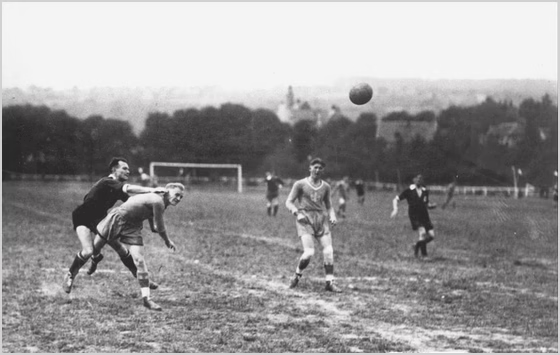
The first handball games began in ancient Greece as a sport called Urania. Players threw a wool ball into the air and jumped to catch it before it touched the ground. Ancient Romans later developed a more intense version known as Harpastum. These early matches served as military training to build speed and strength. From these ancient roots, the game traveled across Europe and transformed into the fast-paced Olympic sport we play today.
Ancient rituals: The prehistoric ancestors of the court.
Prehistoric ball games began as sacred rituals to honor the gods and ensure successful harvests. Tribal groups used hand-thrown objects in ceremonies that combined athletic skill with spiritual worship. These early traditions laid the groundwork for competitive court sports. Participants treated the ball as a symbol of the sun or moon during these intense physical matches. Today, the modern handball court serves as a high-speed arena that echoes these ancient and powerful human traditions.
Why did medieval civilizations play with their hands?
Medieval civilizations played with their hands because the game required minimal equipment and fit perfectly in tight urban spaces. Peasants and knights alike used village streets, castle courtyards, and monastery walls as their boundaries. Throwing a ball by hand offered better control and precision than using sticks or feet in these crowded areas. This accessibility turned the sport into a popular pastime for all social classes. These early hand-games provided the foundation for the structured rules and professional courts we see in the modern era.
History of Handball: Mapping the journey from ruins to arenas.
History of Handball moved from ancient ruins to modern arenas through centuries of constant change. This journey began with simple hand-games played in the dirt of ancient civilizations. Northern Europe later refined these traditions into a structured outdoor sport during the late 19th century. The game eventually moved indoors to escape the harsh weather and increase the speed of play. Today, professional handball takes place in high-tech stadiums that seat thousands of screaming fans. This transition from open fields to closed courts created the intense, high-speed spectacle we enjoy now.
The Greco-Roman influence on modern throwing sports.
The Greco-Roman influence on modern throwing sports provided the essential blueprints for competitive handball. Ancient Greeks developed “Urania,” where players coordinated high jumps with precise hand-to-eye passing. Roman soldiers later adapted these skills into “Harpastum,” a gritty team game that focused on speed and tactical deception. These cultures viewed ball games as vital training for agility, strength, and military strategy. They introduced the concept of a defined field and team cooperation to keep the ball away from opponents. This ancient focus on throwing accuracy and physical endurance directly shaped the high-intensity rules of the sport we play today.
The Birth of Modern Rules

Who actually invented the rules we use today?
The modern rules of handball came from one key figure and a growing movement. In 1917, German sports teacher Carl Schelenz helped shape the rules we use today. He refined earlier ideas and turned handball into a fast, competitive team sport. His rules focused on speed, passing, and clear scoring. These changes made the game easier to play and watch. Schelenz’s work laid the foundation for modern handball worldwide.
From grass fields to indoor courts: A major turning point.
The move from grass fields to indoor courts transformed handball into a lightning-fast game. Players originally played on large soccer fields with eleven people per team. This outdoor version was slow and depended heavily on the weather. Moving indoors reduced the team size to seven and created a much faster pace. Athletes could suddenly use specialized shoes for better grip and perform explosive jumps on hard floors. This change made the sport more intense and improved the scoring rate for fans. Indoor courts turned a seasonal hobby into a year-round global powerhouse.
How the 1917 rulebook changed everything forever?
The 1917 rulebook changed handball forever by creating a faster and more competitive sport. Max Heiser and Karl Schelenz wrote these rules to define how players move and score. They introduced the three-step limit to force quick passing and constant action. These rules also allowed for more physical contact and aggressive defense. This new structure separated handball from soccer and gave it a unique identity. These changes helped the sport grow from a school game into a professional athletic battle.
Why did Germany dominate the early era of the sport?
Germany dominated the early era of handball because the country integrated the sport into its national physical education system. Schools and gymnastics clubs across Germany adopted the game to build strength and discipline in young athletes. The government also provided massive funding for stadiums and outdoor fields to support local leagues. German coaches developed the first advanced training methods and tactical formations. This early professional structure allowed German teams to outclass international rivals for decades. Their deep talent pool and organized competition set the gold standard for the sport’s global development.
The shift from 11-a-side to the fast-paced 7-player game.
The shift from 11-a-side to 7-player handball revolutionized the speed of the game. Smaller teams allowed matches to move indoors and escape the outdoor elements. This change forced players to move faster and react quickly in tight spaces. Coaches developed new tactics that emphasized explosive jumps and rapid passing. Scoring increased significantly as the game became more intense and exciting for spectators. This transition turned a slow field sport into the lightning-fast competition we see today.
Global Growth & Olympic Glory
When did the world first see handball in the Olympics?
he world first saw handball in the Olympics during the 1936 Berlin Games. This early version took place outdoors on large grass fields with eleven players per team. The sport then disappeared from the Olympic program for several decades. It finally returned as a permanent indoor sport at the 1972 Munich Games. This comeback introduced the fast-paced, seven-player format to a global audience. Today, handball remains one of the most exciting and high-energy events in the Summer Olympics.
The rise of European powerhouses: A legacy of dominance?
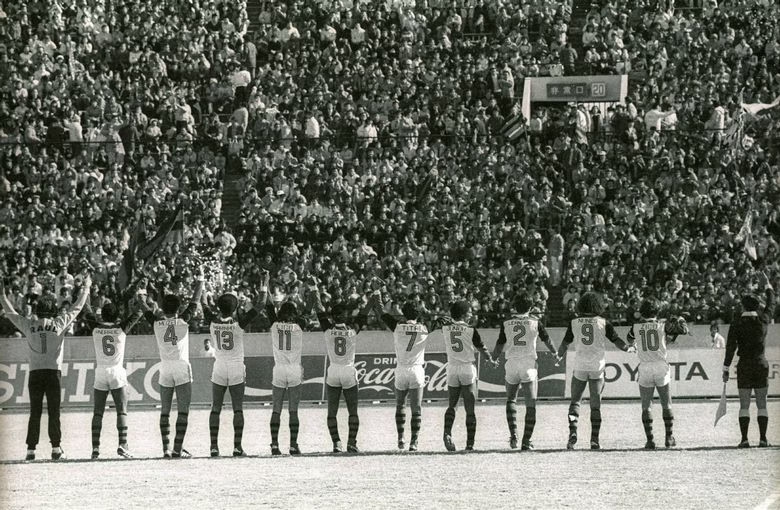
The rise of European powerhouses created a lasting legacy of dominance in international handball. Countries like Denmark, France, and Sweden built elite academies to train young athletes from an early age. These nations invested heavily in professional leagues and high-tech training facilities. This strong infrastructure produces the most skilled players and tactical coaches in the world. European teams currently hold almost every major world title and Olympic gold medal. Their deep passion for the sport ensures that Europe remains the global center of handball excellence.
How politics and war nearly destroyed the sport?
The impact of politics and war nearly destroyed the sport during the mid-20th century. World War II forced many European leagues to shut down as athletes left the court for the battlefield. International competitions stopped entirely for years, breaking the momentum of the game’s early growth. Political divisions during the Cold War later created rivalries that split the handball community into Eastern and Western blocs. Many clubs lost their funding and facilities during these periods of intense global conflict. Despite these massive setbacks, the sport survived and rebuilt into the massive global phenomenon we see today.
The expansion of the game: Why it took over the globe?
The expansion of the game occurred because handball requires very little equipment to play. Schools and community centers worldwide adopted the sport because it only needs a ball and a flat surface. Its high-speed action and physical nature appealed to young athletes looking for an intense team experience. National federations worked hard to promote the game in Africa, Asia, and the Americas. Television broadcasts and digital media eventually brought the excitement of professional leagues to millions of new fans. This accessibility helped handball grow from a European pastime into a truly global athletic phenomenon.
Key milestones in the history of Handball professional leagues?
Key milestones in the history of Handball professional leagues began with the founding of the International Handball Federation in 1946. This organization established the first official world championships to standardize competition across borders. The launch of the EHF Champions League in 1993 transformed the sport by turning local clubs into global brands. Television deals in the early 2000s brought massive sponsorship money and professional contracts to top players. These developments helped the sport transition from amateur hobby to a multi-million dollar industry. Today, professional leagues attract elite talent and millions of viewers worldwide.yes, following my instraction..
The Modern Game & Legacy
How has technology changed player performance?
echnology changed player performance by introducing high-tech tools to track every movement on the court. Coaches now use wearable sensors and AI cameras to monitor heart rates, jump heights, and sprinting speeds in real time. This data helps teams identify fatigue early and prevents serious muscle injuries during intense matches. New video analysis software allows players to review their shooting angles and defensive positioning with perfect accuracy. These innovations turn raw physical talent into precise, data-driven athletic success. Athletes can now train smarter and recover faster to maintain peak performance throughout the long season.
The evolution of the ball: From leather to high-tech grip?
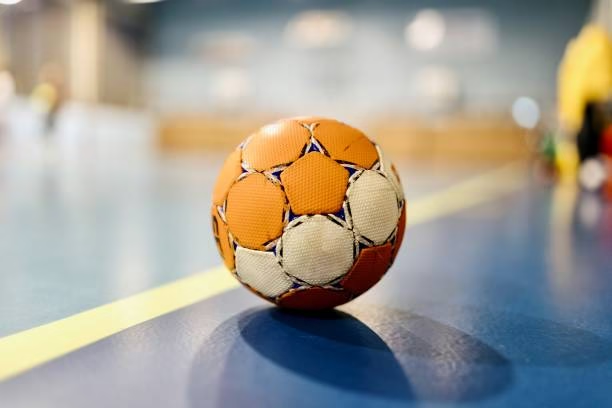
The evolution of the ball from heavy leather to high-tech grip materials revolutionized scoring and control. Early players used hand-stitched leather balls that became heavy and slippery when wet with sweat. Manufacturers later introduced synthetic surfaces that maintain a consistent weight and shape throughout the match. Modern balls feature advanced textures that provide incredible grip even without the use of sticky resin. These innovations allow players to perform complex trick shots and lightning-fast passes with total confidence. This technological shift directly increased the speed of the game and made it more exciting for fans to watch.
The future of the sport: How virtual reality is changing training?
The future of the sport features virtual reality as a game-changing tool for elite training. Players wear VR headsets to practice complex tactical plays without any physical strain on their bodies. This technology allows goalkeepers to simulate thousands of shots from the world’s best attackers in a safe environment. Coaches use these digital simulations to improve player decision-making and reaction times under pressure. VR creates a realistic match experience that athletes can access anywhere at any time. This digital shift prepares the next generation of stars for the high-speed demands of professional handball.
How fans can get involved in the modern handball community?
Fans can get involved in the modern handball community by joining local clubs or following international leagues online. Most cities offer amateur teams that welcome new players of all skill levels. Digital platforms and social media allow fans to interact directly with professional athletes and teams. You can watch live matches through streaming services and participate in global fan forums to discuss game tactics. Attending live events provides a high-energy experience that connects you with thousands of other supporters. These communities offer a great way to stay active and share your passion for this fast-paced sport.
Glossary of Handbal
A Glossary of Handball Terms helps new readers master the language of this fast-paced game. Knowing these words makes watching professional matches more exciting and easier to follow.
- The Crease: The D-shaped area around the goal where only the goalkeeper can stand.
- Seven-Meter Throw: A penalty shot awarded after a serious foul or defensive interference.
- Fast Break: A rapid offensive attack launched immediately after winning the ball.
- Passive Play: A rule that prevents teams from stalling without trying to score.
- Wing Player: An attacker who plays near the sidelines to create wide scoring angles.
- The Pivot: A strong player who operates in the middle of the defense to create gaps.
Share YOUR favorite handball memories
Share your favorite handball memories to join a growing global community of passionate fans. Every player and spectator has a unique story about a thrilling goal or a legendary match. Your personal experiences help keep the history of this intense sport alive for the next generation. Post your comments below or share this article with your teammates to start a conversation. Join the discussion today and celebrate the incredible speed and spirit of handball.
About the Author







Thanks for every other informative site. Where else may just I am getting that type of information written in such a perfect method? I have a project that I’m simply now operating on, and I have been on the glance out for such info.