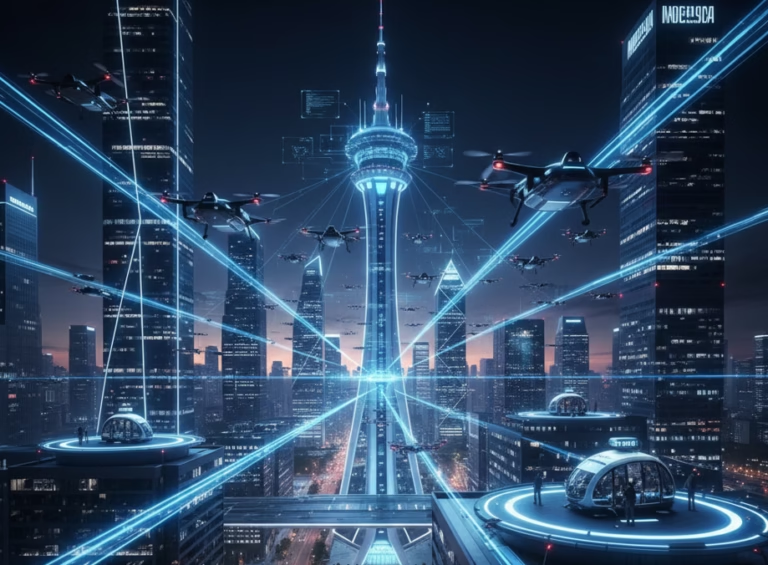
The History of Drones reveals a chilling shift from human-controlled tools to autonomous AI hunters. Modern “sky robots” now use independent logic to track targets and coordinate swarms without human input. This rapid evolution creates a new era of warfare where algorithms, not people, decide the future of the battlefield.
Table of Contents
The Origins of Unmanned Flight: History of Drones
History of Drones: From 19th-Century Balloons to Stealth Jets
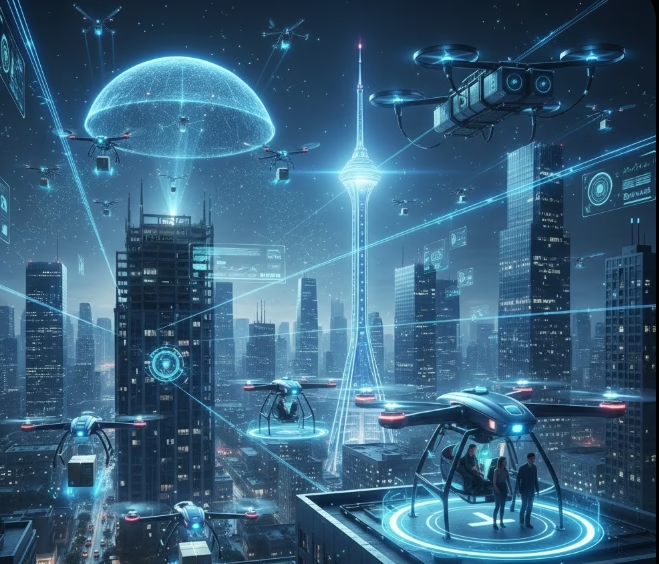
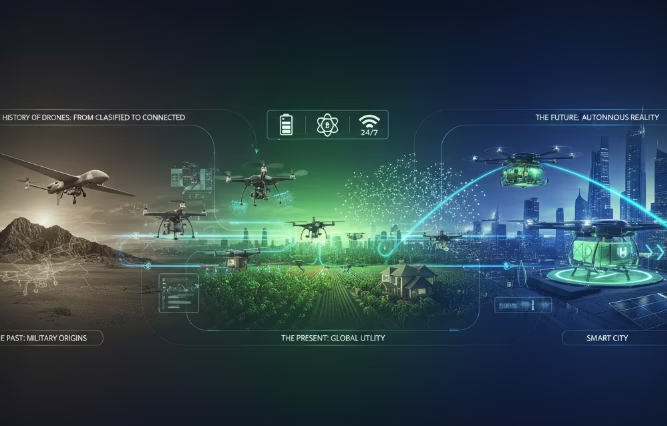
The History of Drones began in 1849 when Austria launched explosive-laden balloons to attack Venice from the sky. These early unmanned attempts eventually evolved into the sophisticated radio-controlled “Queen Bee” target planes used by the British in the 1930s. During the Cold War, secret reconnaissance drones replaced human pilots for high-stakes spying missions over hostile territory. Today, this technology has peaked with AI-powered stealth jets that can navigate complex combat zones without any human input. This rapid evolution from simple floating bombs to invisible, supersonic robots has completely redefined the boundaries of modern aviation.
Who Actually Invented the First Pilotless Aircraft?
British engineer Archibald Low officially invented the first pilotless aircraft, often called the “Aerial Target,” in 1917. While earlier inventors like Nikola Tesla and the Sperry family developed the remote control and gyroscopic stability needed for flight, Low was the first to successfully launch a radio-controlled plane under power. His top-secret project aimed to create a flying bomb that could destroy German Zeppelins without risking human lives. Despite several spectacular crashes during initial tests, his work proved that a machine could follow wireless commands from the ground. This breakthrough directly inspired the famous “Queen Bee” target drones of the 1930s and laid the foundation for every modern UAV in the History of Drones.
The Secret Military Projects That Started it All
The 1940s clandestine program “Project Aphrodite” turned war-weary bombers into remote-controlled missiles, marking a massive leap for unmanned flight. During the Cold War, top-secret projects like “Red Wagon” and “Tagboard” allowed the United States to spy on hostile territory without risking pilots. These early prototypes captured images on physical film and dropped the canisters from the sky for mid-air recovery. By the 1980s, the “Amber” and “Gnat” programs shifted the focus toward long-endurance flight and real-time video feeds. These experiments proved that robots could survive extreme environments, providing the foundation for the modern History of Drones.
Why Early Flight Experiments Failed—and What Changed
Early flight experiments often ended in disaster because inventors lacked reliable stabilization and wireless control systems. These primitive aircraft frequently stalled or spiraled out of control as soon as they left the ground. The breakthrough came when engineers integrated gyroscopes to keep the wings level and pneumatic servos to move the flight controls automatically. At the same time, improvements in radio technology allowed operators to send commands from a distance without interference. In the History of Drones, we see these mechanical and electronic upgrades transformed unstable flying bombs into the reliable platforms .
The Forgotten Era of Radio-Controlled Targets
In the 1930s, the British Royal Navy launched the “Queen Bee,” the world’s first truly successful returnable drone. This wooden biplane served as a flying target for anti-aircraft gunners to practice their aim without endangering human pilots. Actors like Reginald Denny later brought this technology to America, creating the Radioplane company to mass-produce thousands of target drones for World War II. These early remote-controlled aircraft used simple vacuum-tube receivers and basic radio signals to perform loops and dives. While often overlooked, this high-production era proved that unmanned flight was reliable and scalable, cementing a vital chapter in the History of Drones.
Impact and Transformation
How Warfare Changed Forever in the 20th Century
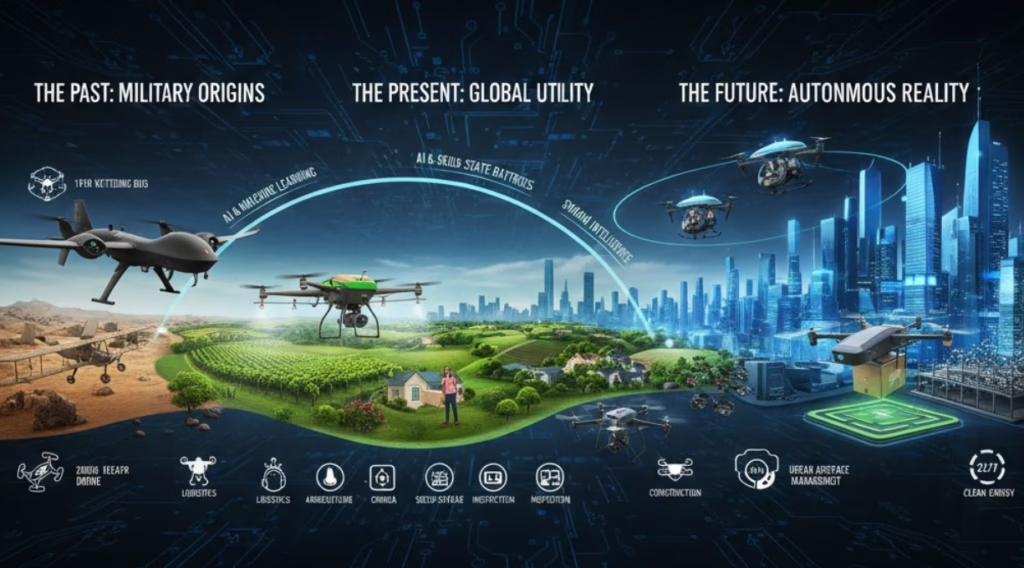
Warfare shifted from massive front-line battles to precise, long-distance strikes as unmanned technology removed the pilot from the cockpit. During the Vietnam War, the U.S. military deployed over 3,000 “Lightning Bug” drones to photograph high-risk targets without losing a single airman. The introduction of GPS and satellite links in the 1990s allowed operators to steer aircraft from an entire continent away. These machines transformed the battlefield into a 24-hour surveillance zone where enemies could no longer hide
From Battlefield to Backyard: The Civilian Pivot
The tech industry transformed military surveillance tools into affordable consumer gadgets during the early 2010s. Companies like DJI introduced easy-to-fly quadcopters equipped with GPS and stabilized cameras for the general public. These devices used flight controllers to handle the difficult physics of hovering, allowing anyone to capture professional aerial footage. This shift sparked a creative revolution in filmmaking, real estate, and agriculture across the globe. By bringing advanced flight tech to the masses, this era humanized the History of Drones and moved it into our daily lives.
Why the Predator Became a Household Name
The Predator started as a “silent spy,” built in a California garage by Abraham Karem. It could stay in the air for 24 hours, giving commanders an “unblinking eye” on the enemy. Everything changed in 2001 when it was armed with Hellfire missiles. This turned it into a satellite-controlled hunter that could strike from across the world, making it the most famous face of modern robotic warfare.
The Rise of the Quadcopter: A Global Tech Shift
The rise of the quadcopter transformed complex military technology into an accessible global tool for everyone. Breakthroughs in smartphone sensors, such as miniaturized gyroscopes and GPS, finally gave these four-rotor machines the stability they needed to fly easily. In 2010, the Parrot AR.Drone sparked a consumer revolution by allowing users to control a flying camera directly from a phone. This shift enabled filmmakers, farmers, and rescue teams to capture high-quality aerial data at a fraction of the cost of a helicopter. By making flight simple and affordable, the quadcopter became the most recognizable icon in the Drone History .
How Modern Pilots Are Being Replaced by Code
Modern pilots are transitioning from active steering to system oversight as sophisticated code takes over the flight deck. In 2026, AI-driven software can handle complex tasks like real-time mapping, obstacle avoidance, and mission planning with zero human input. Many military and industrial systems now allow a single operator to manage entire swarms of aircraft simultaneously using “zero-to-many” automation. While human intuition remains vital for unexpected emergencies, the day-to-day work of flying is increasingly handled by algorithms that never tire or lose focus. This shift marks a turning point where programming skills often matter as much as flight hours.
Critical Questions & Controversies
Are We Trading Privacy for Aerial Convenience?
Drones have turned our skies into a silent surveillance network. With powerful zoom lenses and thermal sensors, they can peer into private backyards and windows while remaining nearly invisible. Even with the 2026 Remote ID laws, privacy remains at risk as unauthorized data harvesting and facial recognition software track people without consent. As drones get smaller and quieter, the line between public safety and personal privacy is disappearing.
Why Did the Government Hide Early Drone Tech?
The government hid early drone technology to protect high-stakes reconnaissance missions and maintain a tactical advantage during the Cold War. Secret programs like the CIA’s “Project Aquiline” developed bird-shaped drones to spy on Soviet nuclear sites without being detected by radar or human eyes. By keeping these projects classified, the military could gather critical intelligence while avoiding the diplomatic fallout of a pilot being captured in enemy territory. Officials even used cover names like “Aerial Target” for early projects to trick foreign spies into thinking the machines were simple, harmless practice equipment. This veil of secrecy allowed the Drone History to advance in the shadows for decades before the public ever saw them in the sky.
The Biggest Disasters in the History of Drones
The History of Drones includes hundreds of major accidents that highlight the technical risks of unmanned flight. Since 2001, the U.S. military alone has recorded over 400 large-scale crashes, with nearly half involving total aircraft destruction or millions in damages. High-profile disasters include a rogue Reaper drone flying uncontrolled across Afghanistan and a civilian quadcopter crashing onto the White House lawn, triggering a national security lockdown. In 2026, the industry continues to struggle with “lost-link” scenarios where a machine loses its satellite connection and flies aimlessly until it runs out of fuel. These frequent failures serve as a stark reminder that even the most advanced sky robots are still vulnerable to mechanical glitches and human error.
Can AI-Powered Robots Fly Safely in Human Airspace?
AI-powered robots can fly safely in human airspace by using advanced “detect-and-avoid” systems that function like a digital brain. These systems use LiDAR, 3D cameras, and radar to scan their surroundings and make split-second decisions to dodge obstacles like birds, power lines, or other aircraft. In 2026, new Unmanned Traffic Management (UTM) platforms act as a virtual air traffic control, coordinating millions of flights to prevent mid-air collisions. While technology is moving faster than government rules, the shift from human pilots to autonomous code is creating a more predictable and safer environment for shared skies. This progress in machine logic ensures that aerial robots can finally navigate the complex world above us without putting people at risk.
What Happens When the Sky Becomes Overcrowded?
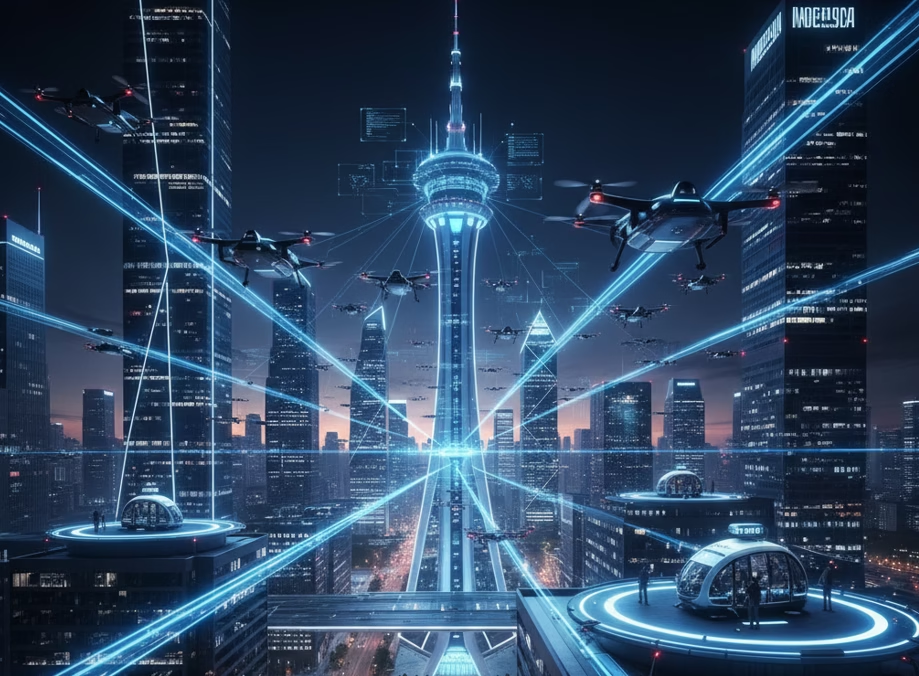
An overcrowded sky forces a total shift toward automated traffic management to prevent catastrophic mid-air collisions. Millions of delivery, medical, and hobbyist devices now require a digital “highway” system where AI controllers assign specific altitudes and flight paths in real time. In 2026, technology like “V2V” (Vehicle-to-Vehicle) communication allows aircraft to talk to each other and maintain safe distances without human intervention. This invisible grid ensures that the air remains organized even as the number of active units grows exponentially. Managing this invisible congestion is the latest vital chapter in the History of Drones.
The Future of the Industry
Will Delivery Bots Replace Your Local Postman?
Drone delivery bots are becoming a permanent supplement to traditional postal workers by handling urgent, lightweight packages in record time. In 2026, retail giants like Walmart and Amazon are scaling operations to hundreds of stores, allowing over 40 million Americans to receive groceries and medicine in under 15 minutes. While drones excel at rapid “last-mile” trips for items under five pounds, they cannot yet handle the bulky parcels or heavy mail volumes managed by human carriers. These autonomous machines serve as a high-speed tool for specific needs rather than a total replacement for the neighborhood postman. This partnership between robots and humans represents the most efficient phase in the History of Drones.
The Next Decade: Autonomous Swarms and Urban Taxis
The next decade will see urban skies transform into organized highways where autonomous swarms and electric air taxis move in perfect digital harmony. Leading aerospace companies are already testing eVTOL (electric vertical takeoff and landing) vehicles designed to whisk passengers across cities in minutes, bypassing ground traffic entirely. These “flying taxis” rely on distributed electric propulsion for quiet, eco-friendly flight, while sophisticated swarm intelligence allows groups of smaller drones to coordinate complex delivery and inspection tasks without human guidance. In 2026, the arrival of certified “vertiports” and AI-driven traffic management systems is finally making the dream of a three-dimensional commute a reality. This leap into mass aerial transit marks the most ambitious chapter yet of the Drone History .
Is This the End of Traditional Commercial Aviation?
Commercial flying is changing fast. In 2026, electric “air taxis” (eVTOLs) are starting to take over short trips under 100 miles, doing the work that small propeller planes used to do. Airlines are using these silent, pilotless drones to fly people straight from city centers to big airports, skipping the highway traffic. While huge jets still cross the oceans, the era of the human-piloted “puddle jumper” is ending, replaced by a new “hybrid sky” of giant planes and autonomous swarms.
How Environmentalists Use Aerial Tech to Save Forests
Environmentalists are fighting climate change by turning high-tech aerial tools into rapid reforestation machines. Specialized planting drones can fire seed pods into the soil with enough force to penetrate the ground, allowing teams to plant thousands of trees in a single day. These machines also use multispectral cameras to map forest health and identify areas at risk of wildfires or illegal logging long before humans could reach them. In 2026, researchers are even using these “eyes in the sky” to track the migration of endangered species through dense canopy cover without disturbing their natural habitat. This shift toward digital conservation is the most eco-friendly chapter.
Beyond 2026: What’s Next for Robotic Flight
Beyond 2026, robotic flight will shift from simple remote control to total self-governing intelligence. New solid-state batteries will double current flight times, allowing drones to stay airborne for hours without needing a recharge. Massive swarms of thousands of tiny robots will work together to build skyscrapers and map entire oceans in days. In cities, automated air taxis will carry passengers across skylines using quiet, electric motors that eliminate the need for traditional runways. As these machines learn to think and adapt on their own, they will become a seamless part of our global transport network. This era of limitless endurance and rapid travel is the most exciting frontier in the History of Drones.
The Triple Threat: Powering the 24-Hour Drone
Three major breakthroughs will allow drones to fly for 24 hours or longer by 2030. First, solid-state batteries will replace liquid parts with high-density lithium metal, offering 50% more range and 15-minute charging. Second, hydrogen fuel cells provide three times the energy of current batteries, allowing small scout drones to stay in the air for an entire day while emitting only water vapor. Finally, autonomous charging stations and solar-harvesting skins will allow robot swarms to land, power up, and relaunch without any human help. These leaps in power and automation will finally remove the limits on how long a machine can stay in the sky.
Swarm Intelligence: The Hive Mind of the Sky
Swarm intelligence allows hundreds of drones to fly as a single, coordinated unit by following simple rules of proximity and speed. Each robot tracks its neighbors in real time to avoid collisions while moving toward a shared goal. This decentralized “hive mind” means the group can complete complex tasks even if several individual units fail or crash. In 2026, these swarms are already being used for massive light shows, search missions, and high-speed agricultural spraying. This transition from solo flight to collective action is a high-speed chapter in the History of Drones.
The Future Sky: A Legacy of Innovation
The History of Drones has moved from secret military weapons to vital tools that define our modern world. In just a few decades, these machines evolved from fragile remote-controlled toys into autonomous robots that can plant forests and save lives. By 2026, the combination of AI-driven code and high-density power has made the sky an organized highway for commerce and travel. While privacy and safety concerns remain, the shift toward a fully connected, three-dimensional world is now permanent. This journey proves that the drone is no longer just a gadget, but the primary engine of a global tech revolution.
About the Author