The History of Isra and Mi’raj (Tentative Date) reveals a breathtaking miracle https://historymix.com/history-of-chichen-itza-from-majesty-to-mystery/that occurred during the Prophet’s most difficult year. This event marks a two-part journey from the city of Mecca to the sacred Al-Aqsa Mosque and then into the highest heavens. It took place around the year 621, shortly after the Prophet lost his beloved wife and uncle. This night of wonder provided divine comfort and introduced the five daily prayers to the world. Historians often commemorate this journey on the 27th of Rajab, though the exact date remains a subject of study. This story continues to inspire millions by showing that hope exists even in the deepest sorrow.
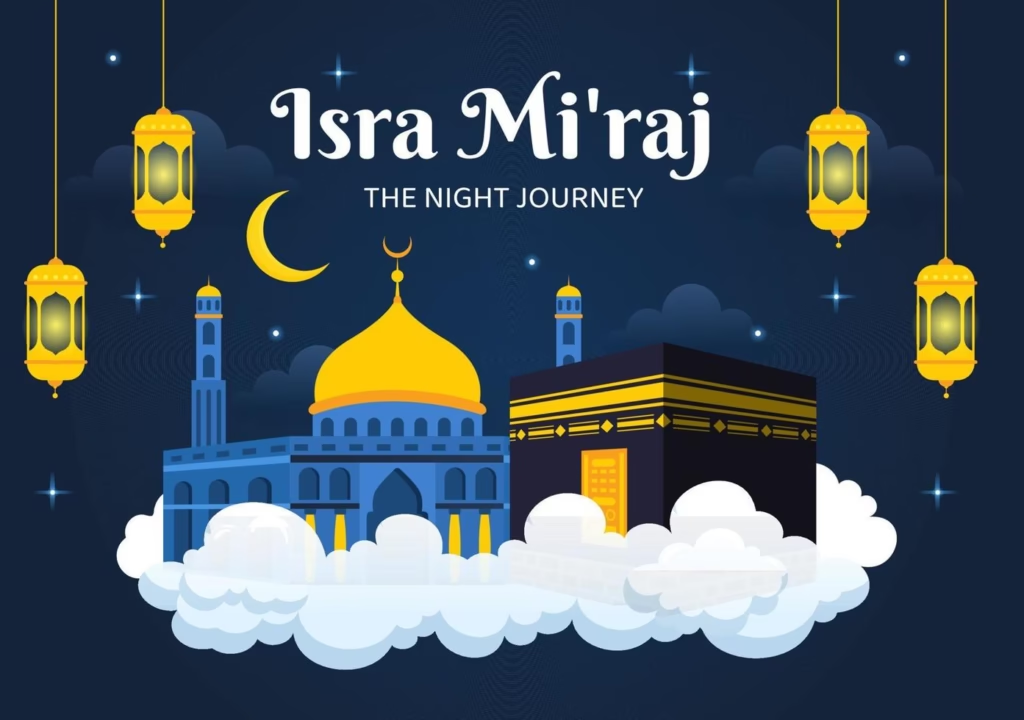
Table of Contents
Detailed timeline of The History of Isra and Mi’raj (Tentative Date)
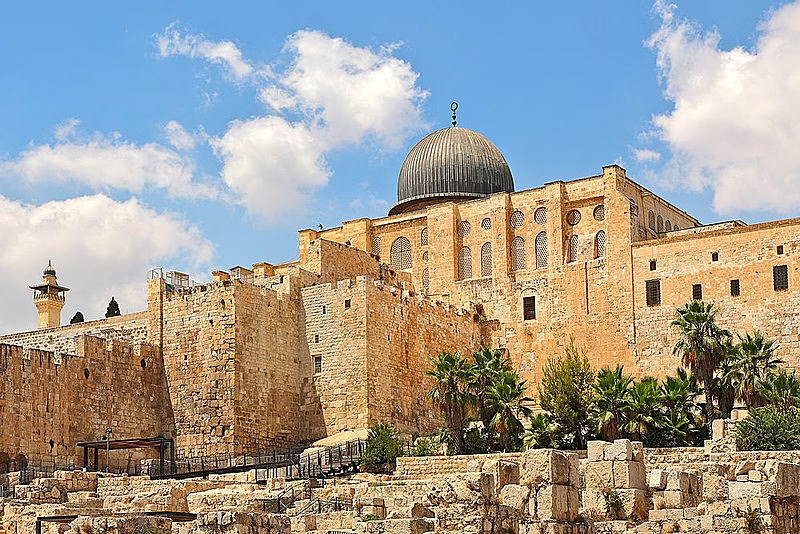
The History of Isra and Mi’raj (Tentative Date) reveals a breathtaking miracle that occurred during the Prophet’s most difficult year. This event marks a two-part journey from the city of Mecca to the sacred Al-Aqsa Mosque and then into the highest heavens. It took place around the year 621, shortly after the Prophet lost his beloved wife and uncle. This night of wonder provided divine comfort and introduced the five daily prayers to the world. Historians often commemorate this journey on the 27th of Rajab, though the exact date remains a subject of study. This story continues to inspire millions by showing that hope exists even in the deepest sorrow.
What is the Year of Sorrow?
The Year of Sorrow marks the most painful chapter in early Islamic history when the Prophet lost his two greatest supporters. His beloved wife Khadija and his protective uncle Abu Talib both died within a short time, leaving him without emotional or political protection. This double tragedy emboldened his enemies in Mecca to increase their persecution and physical attacks. It was a time of deep grief and isolation that tested the Prophet’s resolve to the absolute limit. However, this period of darkness directly preceded the miraculous Night Journey, proving that great relief follows extreme hardship.
The Miraculous Night Journey Begins in Mecca
The Miraculous Night Journey began in Mecca during a quiet night at the Kaaba. The angel Gabriel appeared and opened the Prophet’s heart to prepare him for the divine encounter ahead. He then introduced the Buraq, a spectacular white creature that traveled as far as the eye could see in a single stride. This journey defied every known law of physics and transported the Prophet from Mecca to Jerusalem in seconds. This explosive start turned a moment of rest into the most important voyage in human history. It sets the stage for a story filled with wonder, faith, and cosmic secrets that still captivates the world today.
Why did the Prophet visit Al-Aqsa Mosque?
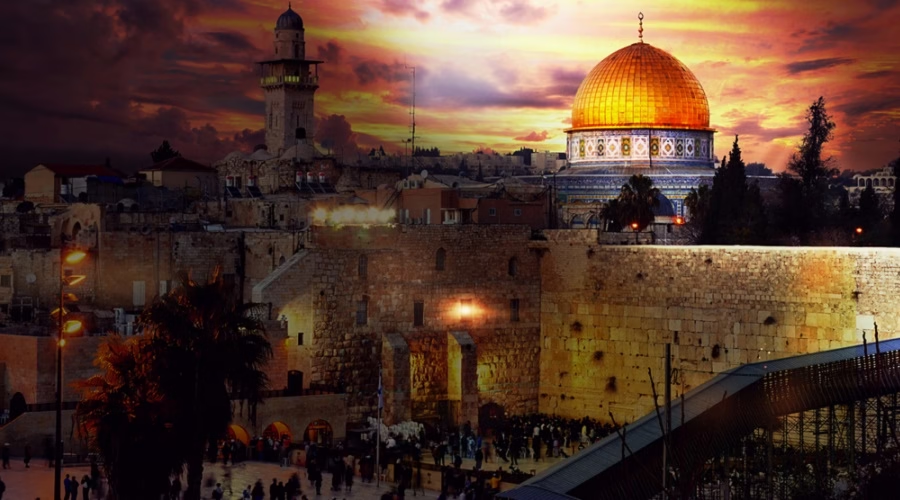
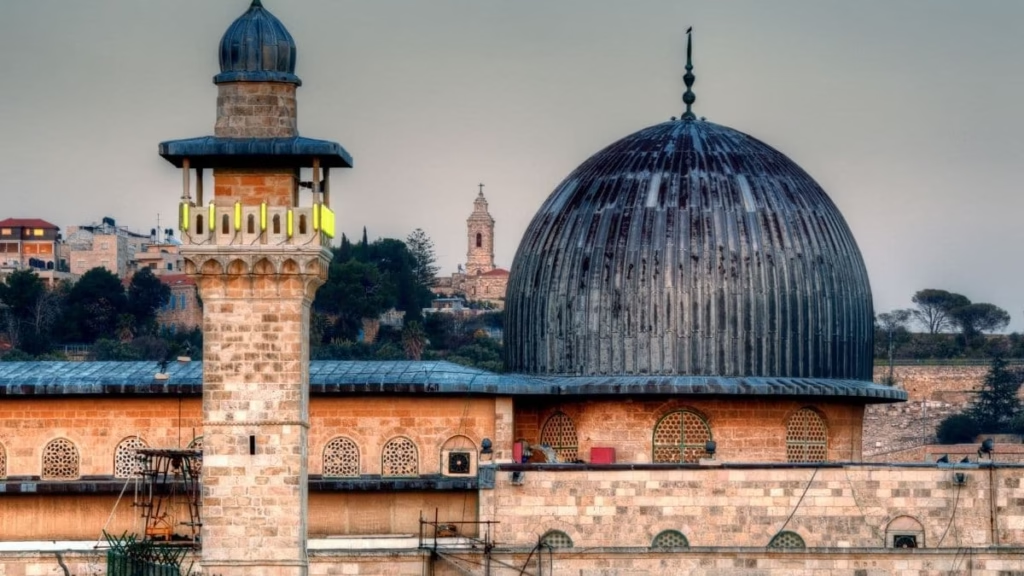
The Prophet visited Al-Aqsa Mosque to lead all previous messengers in a historic and symbolic prayer. This sacred meeting established Jerusalem as a vital center of faith and unified the core message of all divine religions. By stopping at this holy site, the journey bridged the spiritual gap between Mecca and the legacy of the prophets in Palestine. This visit also served as a necessary transition before his incredible ascent into the heavens to meet the Creator. It solidified his leadership and confirmed his role as the final messenger for all of humanity.
The Divine Ascent: Beyond the Seven Heavens
The Divine Ascent took the Prophet beyond the physical world and into the spectacular realms of the seven heavens. He climbed a celestial ladder from Jerusalem to meet legendary figures like Adam, Jesus, and Abraham at different levels of paradise. This journey allowed him to witness the breathtaking beauty of the Sidrat al-Muntaha, the ultimate boundary of creation. He surpassed the limits of space and time to stand in the presence of the Creator and receive divine commands. This ascent remains the most significant spiritual voyage in history because it brought back the gift of prayer. It offers a glimpse into the unseen universe and proves the infinite power of the Divine.
Key Figures the Prophet Met in the Heavens
The Prophet met legendary leaders like Adam, Jesus, John the Baptist, Joseph, Idris, Aaron, Moses, and Abraham during his ascent through the seven heavens. Each figure greeted him as a brother and a fellow messenger, confirming the unity of their divine mission. These encounters provided the Prophet with immense wisdom and strength during his most difficult year. He witnessed their high ranks in paradise and gained unique insights from their past struggles and triumphs. This celestial gathering proved that he carried the final message in a long chain of guidance for humanity. It remains a powerful highlight of the History of Isra and Mi’raj (Tentative Date) because it links the world’s most influential spiritual figures.
The History of Isra and Mi’raj (Tentative Date) Explained
The History of Isra and Mi’raj (Tentative Date) explains a miraculous night that took place around the year 621. Most scholars point to the 27th of Rajab as the most likely time for this divine event. This specific date marks when the Prophet traveled from Mecca to Jerusalem and then ascended into the heavens. This journey happened during a period of deep personal grief to provide strength and spiritual clarity. Understanding the timeline helps believers connect with the struggles and triumphs of early faith. It remains a central pillar of history that defines the spiritual identity of millions across the globe today.
How did the Night Journey change Islamic prayer?
The Night Journey changed Islamic prayer by establishing the five daily prayers as a direct command from the Creator. During his ascent, the Prophet initially received a requirement for fifty prayers a day to keep believers connected to the Divine. He negotiated this number down to five after multiple discussions with Moses, who knew the burden would be too heavy for the people. Even though the number decreased to five, the spiritual reward remains equal to the original fifty. This event transformed prayer from an optional practice into the central pillar of daily life for every Muslim. It created a permanent spiritual link between the earthly world and the heavens that millions follow today.
The Symbolism of Buraq: The Heavenly Steed
The Buraq serves as a powerful symbol of divine speed and the bridge between the physical and spiritual worlds. This white, winged creature traveled from Mecca to Jerusalem in a single stride, defying all earthly limitations of time and space. Its name comes from the Arabic word for lightning, highlighting its incredible velocity and celestial nature. The Buraq represents the honor God bestowed upon the Prophet during his most difficult year of sorrow. This heavenly steed proves that the journey was a miraculous physical reality rather than just a dream. Understanding its role helps readers appreciate the supernatural scale of the entire night journey.
Meeting the Prophets: A Spiritual Reunion
Meeting the Prophets during Isra and Mi’raj captures a rare spiritual reunion. The Prophet Muhammad met earlier prophets in the heavens, one by one. Each meeting showed unity, respect, and shared faith. These encounters confirmed one divine message across time. They revealed the strong bond between all prophets. This moment highlights guidance, honor, and spiritual continuity. It invites readers to explore a night filled with meaning, connection, and divine purpose.
The Sidrat al-Muntaha: Reaching the Ultimate Boundary
Sidrat al-Muntaha marks the ultimate boundary of creation in the Isra and Mi’raj story. It stands where human knowledge ends and divine presence begins. The Prophet Muhammad reached this sacred point during his heavenly ascent. No angel could pass beyond it. This moment shows closeness to Allah unlike any other. It represents limits, honor, and divine mystery. Sidrat al-Muntaha invites readers to reflect on faith, awe, and the highest level of spiritual connection.
Was the Journey Physical or Spiritual?
The debate over whether the journey was physical or spiritual remains a fascinating part of the History of Isra and Mi’raj (Tentative Date). Most scholars confirm that the Prophet traveled with both his actual body and his soul during this miracle. The use of the Buraq and the detailed physical descriptions of Jerusalem support the reality of a bodily journey. If the event were only a dream, the skeptics in Mecca would not have ridiculed the Prophet so intensely. This miracle proves that divine power can suspend the physical laws of our world at will. It stands as a total experience that defies human logic and continues to inspire deep faith.
Returning to Earth: The Challenge of the Skeptics
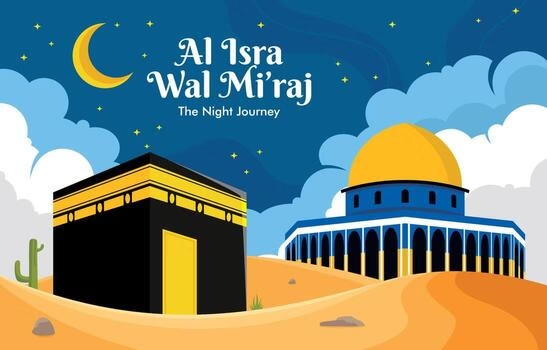
The Prophet returned to Mecca before dawn and immediately shared his miraculous voyage. Skeptics laughed and demanded physical proof of his visit to Jerusalem. He silenced the doubters by accurately describing the gates of the Al-Aqsa Mosque from memory. He also correctly identified the location of a traveling caravan that was still days away from the city. These precise details stunned his enemies and provided undeniable evidence of his journey. This showdown remains a vital part of the History of Isra and Mi’raj (Tentative Date). It proves that divine truth can survive the most intense human skepticism.
Scientific Perspectives on the Night Journey
Modern science explores the Night Journey through the fascinating lens of time dilation and quantum physics. Einstein’s theory of relativity proves that time moves slower at extremely high speeds or near massive objects. This scientific principle helps explain how a voyage across the heavens could happen in a few earth hours. Some thinkers even compare the Buraq’s movement to a wormhole that connects two distant points in space instantly. These theories provide a modern framework for understanding the incredible History of Isra and Mi’raj (Tentative Date). They show that miracles often align with the deepest secrets of our universe. This perspective keeps the ancient story fresh and engaging for a modern, tech-savvy audience.
The Importance of Jerusalem in the Miraculous Trip
Jerusalem holds deep importance in the miraculous journey of Isra and Mi’raj. It served as the first stop before the Prophet’s ascent to the heavens. Al-Aqsa Mosque linked Islam to earlier prophets. The Prophet Muhammad led them in prayer at this sacred site. This moment confirmed Jerusalem as a center of divine history. It united past revelations with Islam. Jerusalem remains a symbol of faith, unity, and spiritual heritage.
How the Night Journey gave hope to early Muslims
The Night Journey provided critical hope for early Muslims during their most difficult years of persecution in Mecca. This miracle occurred right after the Year of Sorrow to prove that the Prophet still held immense divine support. It showed the community that their earthly struggles were temporary and that a magnificent reward awaited the faithful. The gift of five daily prayers established a constant spiritual lifeline that gave them strength during physical attacks. This event transformed their collective despair into a renewed sense of purpose and cosmic victory. It remains a timeless reminder that great relief follows the most painful trials of life.
Ancient Records of the Prophet’s Ascent
Ancient records from the seventh century preserve the incredible story of the Prophet’s ascent through the heavens. The Quran and Hadith collections like Sahih Bukhari provide the most authentic accounts of this miraculous night. Early historians such as Ibn Ishaq documented every detail of the journey in their famous biographies. These manuscripts offer a direct window into the spiritual world of early Islam. They confirm that the History of Isra and Mi’raj (Tentative Date) was an essential belief for the first generation of Muslims. These texts remain perfectly preserved today and continue to guide millions of people across the globe.
What are the five daily prayers’ origins
The daily rhythm of prayer for billions began with a celestial negotiation at the edge of the universe. During the Night Journey, the Prophet ascended to the Divine Presence to receive the mandate for worship. The original command required fifty prayers every single day. The Prophet spoke with Moses, who suggested this burden was too heavy for humanity. After several appeals, the Creator reduced the requirement to just five daily prayers. These five sessions still provide the full spiritual reward of the original fifty. This divine gift transformed the daily life of every believer and remains a central pillar of the History of Isra and Mi’raj (Tentative Date).
The Miracles Witnessed During the Divine Voyage
The divine voyage of Isra and Mi’raj revealed powerful miracles. The Prophet Muhammad traveled across vast distances in a single night. He saw signs of heaven and hell with clear meaning. He witnessed angels, divine order, and sacred scenes. Each miracle carried a lesson of faith and truth. These moments confirmed Allah’s power without limits. The journey invites readers to explore wonders that shaped Islamic belief forever.
Why Abu Bakr earned the title ‘As-Siddiq’
Abu Bakr earned the title ‘As-Siddiq’ because he declared his total belief in the Night Journey while others mocked it. He did not ask for evidence or question the laws of physics. He famously told the skeptics that if the Prophet spoke those words, then the event was absolutely true. This unwavering support earned him the name ‘As-Siddiq,’ which means “The Truthful” or “The Testifier of Truth.” His loyalty provided a massive boost to the early Muslim community during their hardest trials. This title solidifies his position as the Prophet’s closest companion in the History of Isra and Mi’raj (Tentative Date). It proves that true faith does not always require physical proof to believe in divine miracles.
Legacy of the Journey in Modern Islamic Culture
Modern Islamic culture preserves the legacy of the Night Journey through vibrant annual celebrations and a deep focus on spiritual elevation. Millions of Muslims observe Laylat al-Mi’raj every year with special prayers, communal gatherings, and storytelling sessions to honor the Prophet’s ascent. This event inspires modern art, poetry, and literature that explore themes of light, travel, and divine proximity. The journey remains a central symbol of hope, teaching believers that every prayer is a personal “mi’raj” or spiritual climb to the Creator. It also reinforces the eternal status of Jerusalem as a holy site for global Islamic identity. This living history continues to shape the daily habits and festive traditions of the Muslim world today.
How different countries specifically celebrate Laylat al-Mi’raj with unique local traditions?
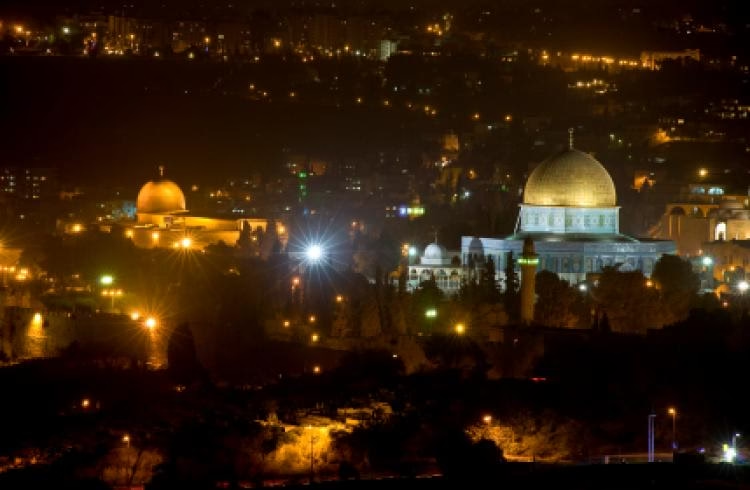
Muslims celebrate Laylat al-Mi’raj in different ways across the world. In Indonesia, mosques host night sermons and Qur’an recitations. In Turkey, people attend special prayers called Kandil nights and light mosque minarets. In Pakistan, families gather for nafl prayers and share sweets. In Bangladesh, mosques organize all-night programs with dua and lectures. In Egypt, scholars deliver talks on Isra and Mi’raj and communities focus on prayer. These local traditions reflect one belief through diverse cultural expressions.
The specific traditional foods served during these celebrations around the world?
Traditional foods give Laylat al-Mi’raj a warm local flavor around the world. In Turkey, families serve helva and lokma to mark the sacred night. In Pakistan and India, people share kheer, halwa, and sweet rice. In Bangladesh, semai and homemade sweets appear on many tables. In Indonesia, communities prepare nasi tumpeng and local desserts after prayers. In the Middle East, dates, milk, and simple sweets remain common. These foods turn remembrance into a shared experience of faith, culture, and unity.
How the story of the Night Journey is taught to children through these traditions?
Parents teach the story of the Night Journey to children by using engaging traditions that spark wonder and curiosity. They use vibrant picture books and colorful shadow puppets to illustrate the Prophet’s flight on the Buraq. Families gather to drink milk together while elders explain why the Prophet chose it as a symbol of pure faith. Many communities organize “Mi’raj” nights where children recite poems and win small prizes for learning about the seven heavens. These activities make the History of Isra and Mi’raj (Tentative Date) relatable and fun for the younger generation. By involving kids in baking traditional sweets, parents ensure these spiritual lessons stay in their hearts forever.
Conclusion
The History of Isra and Mi’raj (Tentative Date) remains a powerful testament to the limitless power of the Creator and the high status of the Prophet. This journey bridged the gap between the physical world and the divine realm, leaving behind the gift of daily prayer and a message of eternal hope. It transformed a moment of deep sorrow into a cosmic victory that still unites millions of people today through faith and tradition. Every detail of the voyage serves as a reminder that the spiritual path offers rewards far beyond human imagination. This miracle continues to inspire hearts, challenge minds, and anchor the identity of the global Muslim community.
Test Your Knowledge: The Miraculous Night Journey Quiz
How well do you know the story of the History of Isra and Mi’raj (Tentative Date)? This quick quiz challenges your memory of the Prophet’s journey through the heavens. See if you can get a perfect score!
1. Where did the Prophet’s ascent to the heavens begin?
- A) Mecca
- B) Jerusalem (Al-Aqsa Mosque)
- C) Medina
- D) Mount Sinai
- Answer: B. Jerusalem served as the sacred bridge between the earth and the celestial realms.
2. What is the name of the tree at the ultimate boundary of creation?
- A) The Olive Tree
- B) The Tree of Life
- C) Sidrat al-Muntaha
- D) The Tuba Tree
- Answer: C. The Sidrat al-Muntaha marks the point where the physical universe ends.
3. Which companion earned the title ‘As-Siddiq’ for his unwavering faith?
- A) Umar ibn al-Khattab
- B) Ali ibn Abi Talib
- C) Abu Bakr
- D) Uthman ibn Affan
- Answer: C. Abu Bakr believed the story instantly without demanding physical proof.
4. Which drink did the Prophet choose, symbolizing the natural state of faith?
- A) Water
- B) Milk
- C) Honey
- D) Juice
- Answer: B. The Prophet chose milk, which remains a symbolic drink for Muslims today.
5. How many daily prayers were originally commanded before being reduced to five?
- A) 10
- B) 25
- C) 50
- D) 100
- Answer: C. The original command was fifty prayers, reduced out of mercy for humanity.
About the Author